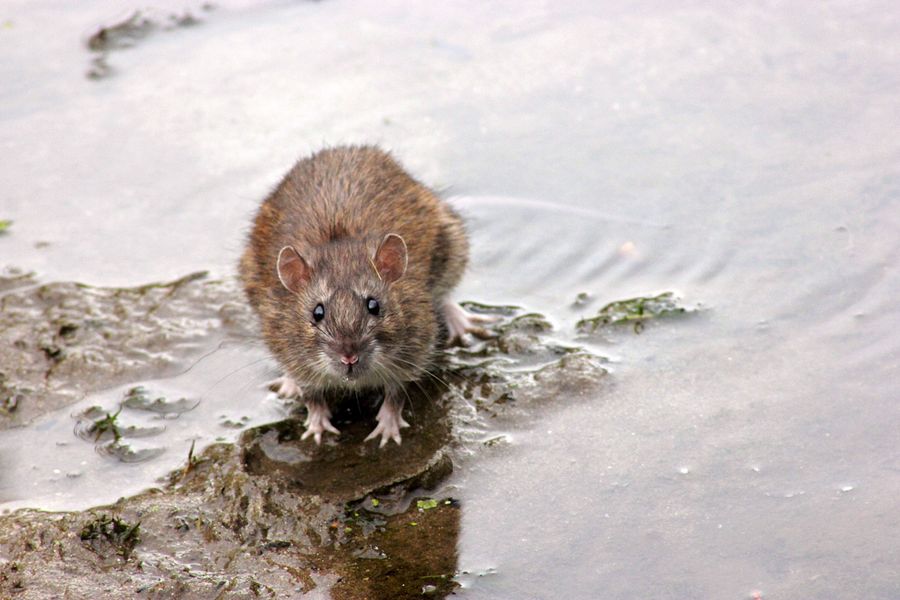
What rat burrows look like
Norway rats dig. Their burrows are round holes, usually two to four inches across, with smooth, packed edges and a fan of loose dirt nearby. Active burrows often have a worn path leading to them and fresh dirt pushed out. You find them along the edge of a slab, under sheds and decks, beside AC pads, under dense shrubs, in garden beds and along creek banks and seawalls.
Roof rats rarely burrow, so burrows tell you which rat you are dealing with. In Jacksonville that usually means a yard near water, a property with a shed or woodpile, or a commercial site with dumpsters and loading docks.
Treatment depends on the setting. Options include trapping at burrow entrances, tamper-resistant bait stations placed near the burrows, and collapsing and filling burrows once activity stops. Some products are applied directly into burrows by licensed professionals. Ask what will be used and whether it is safe for your pets and the wildlife in your yard.
What a thorough job includes
A complete burrow treatment includes:
- Mapping active burrows by checking for fresh dirt and worn runs
- A plan that fits the yard: traps, locked bait stations or both
- Keeping any bait in tamper-resistant stations, as UF/IFAS says Florida labels require outdoors
- Return visits to check activity and remove dead rats
- Collapsing and filling burrows, and sometimes packing them with gravel or wire mesh along a slab edge
- Removing harborage: woodpiles, debris, overgrown ground cover and pet food left out
- Sealing any slab, garage or crawl space gaps the rats are using to get into the house
Step by step
- The technician finds and marks the active burrows.
- You agree on a written plan that accounts for kids, pets and wildlife.
- Traps or stations go in near the burrows and runways.
- Burrows are checked on return visits. Re-opened holes mean rats are still there.
- Once activity stops, burrows are collapsed and filled.
- Harborage is reduced and the house is sealed at ground level.
Want a technician to look at your place?Free call. You are connected with an independent provider near you.
(904) 593-1371Tap to callWhere Jacksonville rats dig
Water is the common thread. Jacksonville sits on the St. Johns River, with the Ortega River, the Trout River, Julington Creek, Pottsburg Creek and the Intracoastal Waterway running through or around it. Norway rats like soft banks near water, and properties on seawalls and creeks see more burrowing.
Sandy soil is easy digging. Much of the First Coast sits on sand, and rats burrow easily along slab edges and under sidewalks. That can undermine pavers and leave voids under a slab edge.
Commercial areas near the port and rail lines have the same problem at a larger scale. Burrows show up along fence lines, under dumpster pads and beside loading docks. See warehouse rodent control for those sites.
At home, the usual triggers are a shed sitting on the ground, a woodpile against a fence, a compost pile, bird feeders dropping seed, and a dog food bowl left outside overnight. Fix those and burrow problems shrink.
Yard changes that keep burrows from coming back
Once the burrows are closed, the yard has to stop attracting rats, or new ones dig in nearby. Most of these changes are simple.
Raise sheds and woodpiles, or put a skirt of hardware cloth around the base of a shed and bury the bottom edge so rats can't dig under it. Store firewood off the ground on a rack and away from the house. Clear dense ground cover and ivy along the foundation, where rats like to start a burrow out of sight.
Feed pets indoors. If you keep chickens or feed birds, clean up spilled feed every evening and store feed in metal cans. Pick up fallen fruit and nuts.
Along seawalls and creek banks, keep the area at the top of the wall trimmed so you can see new holes. Check it once a month. A new burrow found early takes one visit to deal with. A colony that has been digging all summer takes several.
Rat Burrow Treatment questions
How do I know a burrow is active?
Loosely plug the hole with newspaper or loose dirt. If it is opened again in a day or two, rats are using it.
Can I just fill the holes with dirt?
Rats will dig them out again if they are still there. Fill burrows after trapping or baiting has removed the rats.
Is burrow treatment safe for my dog?
Ask before work starts. Outdoor bait must be in tamper-resistant stations under Florida label rules, and many technicians use traps in boxes in yards with pets.
Are the burrows under my slab dangerous?
Large burrow systems can wash out sand and leave voids under a slab edge, walkway or pavers. Have them closed once the rats are gone.
Why do I have rats in the yard but not the house?
They may not have found a way in yet, or they are using a shed or garage. Burrow treatment plus ground-level sealing keeps it that way.
Can I stop rats from digging under my shed?
Yes. A skirt of hardware cloth around the base, buried a short way into the soil, keeps them from tunneling under it.
Related reading
What to say when you call
Your call goes to an independent rodent control provider serving Jacksonville. A two-minute description gets you a better answer on timing and price.
Tell them
- ✓Rats or mice, if you know. Rice-grain droppings point to mice; droppings a quarter inch to half an inch long point to rats.
- ✓Where you see or hear them: attic, soffit, walls, kitchen, garage, lanai, pool cage or yard.
- ✓How long it has been going on and whether it is getting worse.
- ✓The building: block-and-stucco ranch on a slab, older wood-frame house on piers, townhome, condo, apartment, restaurant or warehouse.
- ✓Your neighborhood or ZIP code and the best time for a visit.
- ✓What you have already tried, like snap traps, store bait or foam in a gap.
Ask them
- ?Is the company licensed by FDACS under Chapter 482, and will the technician carry a state ID card?
- ?Will the technician seal entry points, or only set traps and bait?
- ?What does the price include, and how many return visits are part of it?
- ?Can I get the plan and the quote in writing before work starts?
- ?What will be placed inside the house, and is it safe around kids and pets?
Get rat burrows treated and closed
One free call connects you with an independent rodent technician who works the First Coast. Ask for a written plan and quote before work starts.
(904) 593-1371Jacksonville, FL · Tap to call